Introduction
Kitchen counters only have so much real estate, and most households eventually run into the same dilemma: a slow cooker here, a rice cooker there, a steamer basket buried in a cabinet, and a stack of takeout menus for the nights when none of it feels worth the effort. Multi-function cookers emerged as a response to exactly this problem, and few products are as closely associated with that category as the Instant Pot line.
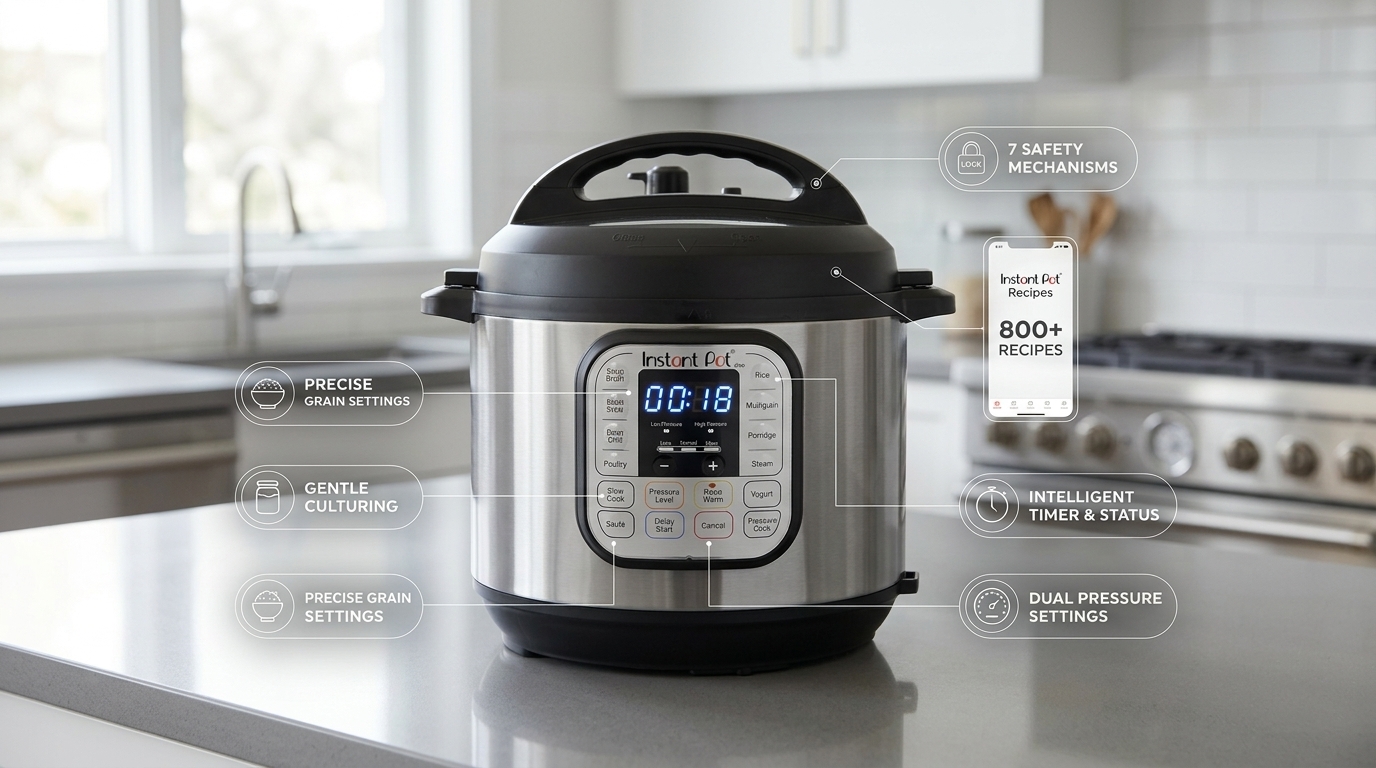
The Instant Pot Duo 7-in-1 Electric Pressure Cooker, in its 6-quart stainless steel configuration, is built around a simple premise: instead of owning several single-purpose appliances, a household can rely on one countertop unit that handles pressure cooking, slow cooking, rice preparation, steaming, sautéing, yogurt making, and warming, with sterilizing capability built in as well. It also connects to a companion app that includes a large recipe library, which is meant to help people get oriented without having to guess at settings.
This article walks through what the appliance actually does, how it tends to get used in a typical kitchen, who might find it useful, and what’s worth thinking about before adding one to your home. The goal here isn’t to tell you this is the only option worth considering — it’s to lay out the information clearly so you can decide whether it fits the way you cook.
Key Features
Multiple Cooking Functions in One Appliance
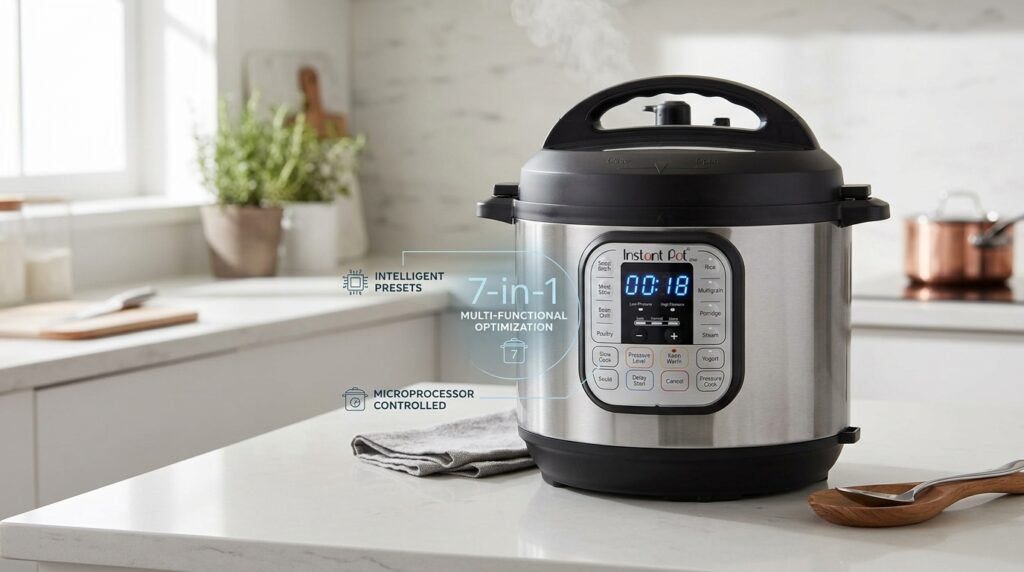
At its core, this is an electric pressure cooker, but the “7-in-1” label reflects the range of other functions built into the same unit: slow cooking, rice cooking, steaming, sautéing, yogurt making, and food warming. Sterilizing — useful for baby bottles, canning jars, or other kitchenware — is also supported, which is why some listings describe it as offering more than seven total uses. Rather than switching between separate appliances, a person can move from browning meat to pressure cooking to keeping a dish warm using the same pot and base unit.
Smart Cooking Programs
The Duo includes a set of pre-programmed cooking modes — commonly listed as Soup/Broth, Meat/Stew, Bean/Chili, Poultry, Sauté, Rice, Multigrain, Porridge, Steam, Slow Cook, Keep Warm, Yogurt, and Pressure Cook, along with a manual setting for more direct control. Each program is designed to apply appropriate pressure, temperature, and timing automatically, which removes some of the guesswork that comes with learning a new appliance. Manual mode remains available for anyone who wants to set their own time and pressure level instead of relying on a preset.
Stainless Steel Construction
The inner cooking pot is made from food-grade 304 (18/8) stainless steel with a three-ply bottom, which is intended to promote more even heat distribution during sautéing and pressure cooking. Because the pot has no non-stick chemical coating, it’s generally regarded as a more durable option over repeated use, and both the inner pot and the lid are described as dishwasher safe, which simplifies cleanup after cooking.
Safety Mechanisms
Pressure cookers have a reputation — not always deserved by modern versions — for being intimidating or risky. This model is built with more than ten built-in safety mechanisms, including overheat protection and a lid that locks and seals during pressure cooking to prevent it from being opened while the unit is pressurized. The appliance is UL and ULC listed, which means it has been evaluated against recognized safety standards for electrical appliances sold in North America. None of this eliminates the need for a user to read the manual and follow basic operating guidelines, but it does reflect a level of engineered redundancy that earlier generations of stovetop pressure cookers didn’t have.
Companion App and Recipe Access
The product includes access to a companion app advertised as containing over 800 recipes. This is meant to function as a built-in cookbook, offering guidance on cook times, liquid ratios, and program selection for a wide variety of dishes — useful for someone who isn’t sure how long to pressure cook a specific cut of meat or how much water a particular grain needs. It’s worth noting that recipe apps generally require a smartphone and, depending on the version, an internet connection to browse or search recipes.
Everyday Convenience Details
Beyond the core cooking functions, there are a handful of smaller design details worth mentioning. A 24-hour delay start timer allows ingredients to be loaded in advance and cooking to begin later, which can be useful for planning around a work schedule. An automatic Keep Warm function activates once cooking finishes, which helps if a meal needs to sit for a bit before everyone’s ready to eat. The stainless steel exterior is described as fingerprint-resistant, and the housing includes handles positioned to be usable by both left- and right-handed users. A stainless steel steamer rack is included as well, which extends the unit’s steaming capability without needing a separate purchase.
How It Can Be Used
A multi-function cooker like this tends to earn its keep through variety rather than any single standout feature. Below are some of the more common ways households put a 6-quart unit like this to use.
Weeknight meals that would otherwise take longer. Dishes like soups, stews, chili, and braised meats often benefit from long, slow cooking to develop flavor and tenderness. Pressure cooking can significantly shorten that process by cooking food in a sealed, pressurized environment, which raises the boiling point of liquids and speeds up how quickly heat penetrates ingredients. This doesn’t replace the flavor benefits of a long, unhurried braise for every dish, but for many everyday meals, it can compress a multi-hour process into a fraction of that time.
Batch cooking grains, beans, and legumes. Rice, quinoa, lentils, and dried beans are all suited to the appliance’s dedicated programs. Dried beans in particular are often time-consuming to cook properly on a stovetop, and a pressure cooker can make it more realistic to cook from dry rather than relying on canned beans every time.
Steaming vegetables, seafood, or dumplings. With the included steamer rack, the pot can be used to steam food above a small amount of water rather than submerging it, which helps preserve texture and nutrients in delicate ingredients like fish fillets or leafy greens.
Browning and sautéing before pressure cooking. The sauté function allows meat or vegetables to be browned directly in the pot before switching to a pressure or slow cook cycle, which means fewer dishes to wash compared to browning in a separate pan and transferring everything to another appliance.
Making yogurt at home. The yogurt setting maintains a consistent low temperature over an extended period, which is what’s needed to culture milk into yogurt. This can be a lower-cost, less wasteful alternative to buying individual yogurt containers for households that go through a lot of it.
Sterilizing bottles, jars, or utensils. The sterilizing function applies to situations like preparing baby bottles or glass jars, using steam and heat to reduce bacteria on surfaces. This is a smaller-scale, kitchen-appliance form of sterilization rather than a substitute for specialized medical or laboratory equipment.
Keeping food warm for gatherings. Once a dish finishes cooking, the automatic Keep Warm setting can hold food at a safe serving temperature, which is convenient for potlucks, holiday meals, or any situation where food needs to sit for a while before it’s served.
Planning meals ahead of time. The delay start timer means ingredients can be added to the pot in the morning, set to begin cooking later, and finish close to dinnertime — similar in spirit to how a slow cooker is often used, but with the added flexibility of switching cooking methods depending on the dish.
Who It May Be Suitable For
This type of appliance tends to appeal most to a handful of household types, though it’s worth being honest that it isn’t a universal fit for everyone.
Busy families and working households often gravitate toward multi-cookers because they reduce the number of steps and dishes involved in getting a meal on the table, particularly on nights when time is limited.
People trying to consolidate kitchen appliances — whether because of limited counter or cabinet space, an upcoming move, or simply wanting fewer gadgets to maintain — may find that replacing several single-purpose devices with one unit makes sense, provided the trade-offs (discussed below) are acceptable.
Meal preppers and batch cooks who prepare grains, proteins, or beans in larger quantities for the week ahead can use the larger cooking programs and 6-quart capacity to prepare multiple servings in a single session.
Newer or less experienced cooks may appreciate the structure that comes with pre-set programs and a recipe app, since it offers a starting point rather than requiring them to already know cook times and ratios from experience.
Households of roughly four to six people are generally well matched to the 6-quart capacity, since it’s sized to prepare family-style portions without being oversized for smaller groups. Larger households, or people who regularly cook for more than six, might want to look at bigger-capacity versions in the same product line, while single-person or two-person households might find a smaller-capacity model easier to manage for everyday portions.
Important Things to Consider
No appliance is the right fit for every kitchen, and there are a few practical points worth weighing before deciding whether this one suits your household.
There’s a learning curve with pressure cooking in general. Even with pre-set programs, understanding concepts like natural versus quick pressure release, minimum liquid requirements, and how altitude affects cook times takes a bit of reading and practice. The manual and app are there to help, but it’s not necessarily an appliance you can use perfectly on the very first attempt without any adjustment.
Storage and counter space still matter. While it replaces several appliances functionally, the unit itself — plus its lid, inner pot, and included accessories — still needs a home in your kitchen. It’s more compact than owning six separate machines, but it isn’t small.
Capacity is worth matching to your household size. A 6-quart pot can feel like the right size for a family dinner but excessive for a single serving of rice, and conversely, it may run short if you regularly cook for a large group or host often. It helps to think about your typical batch sizes before assuming one size fits every situation.
Cleaning involves a bit more than wiping down a countertop. The inner pot and lid are dishwasher safe, which helps, but the sealing ring on the lid can absorb odors from strongly flavored dishes over time and typically benefits from regular cleaning or periodic replacement.
The companion app requires a smartphone and, in most cases, an internet connection to browse the recipe library, so it’s an added convenience rather than something that functions independently of a phone or tablet.
It is not designed or approved for home canning. This is a common point of confusion with electric pressure cookers generally. Even though the appliance pressure-cooks food, it isn’t calibrated or tested to the standards required for safe pressure canning of low-acid foods, so it shouldn’t be treated as a substitute for a dedicated canning-approved pressure canner if that’s a specific need.
A Broader Look: How This Category of Appliance Compares
It can help to step back and think about the broader categories this product touches, rather than comparing it to any single competing item.
Traditional slow cookers are built around one core strength: low, steady heat over a long period, often four to eight hours or more. They’re straightforward to use and require little supervision, but they generally can’t sauté, pressure cook, or steam, and they take considerably longer to produce a finished meal.
Standalone electric pressure cookers (without additional functions) focus on speed, using pressurized steam to cook food faster than conventional methods. They’re effective for their core purpose but typically don’t offer the slow cooking, yogurt making, or sautéing versatility that a multi-function unit provides.
Dedicated rice cookers are optimized specifically for grains and tend to produce very consistent results for rice in particular, but they’re single-purpose by design and won’t handle stews, yogurt, or steaming vegetables in the same unit.
Multi-function cookers, as a category, aim to combine several of these capabilities into one appliance. The trade-off is generally that a multi-function unit may not outperform a highly specialized single-purpose appliance at that one specific task — a dedicated rice cooker might give slightly more consistent rice, for instance — but it offers broader utility across a range of cooking methods without requiring separate machines for each one. Whether that trade-off makes sense really comes down to how much variety you want from one appliance versus how much you value specialization in a single task.
Frequently Asked Questions
Is this appliance safe to use for pressure cooking? Electric pressure cookers built with modern safety mechanisms — including lid locks, pressure sensors, and overheat protection — are designed to prevent the lid from being opened while the pot is pressurized and to regulate internal pressure automatically. As with any kitchen appliance, following the included instructions and not attempting to bypass safety features is important.
Can it really replace multiple separate appliances? For many of the functions it offers — slow cooking, steaming, sautéing, rice cooking, and yogurt making — yes, it can serve as a substitute for owning individual appliances for each task. Whether it fully replaces a specialized version of any one of those appliances depends on how demanding your use case is; a serious rice enthusiast, for example, might still prefer a dedicated rice cooker with more granular grain settings.
What’s the difference between the pressure cook and slow cook settings? Pressure cooking uses a sealed, pressurized environment to cook food faster by raising the boiling point of liquid inside the pot. Slow cooking uses low, steady heat over a much longer period, similar to a traditional slow cooker, without building pressure. Both are available on the same unit, so the choice comes down to how much time you have and what texture or flavor development you’re aiming for.
Does the sealing ring need to be replaced? Over time and repeated use, the silicone sealing ring on the lid can wear down or retain odors from food, particularly after cooking strongly flavored dishes. Regular cleaning helps, and many users eventually replace the ring after extended use, though the timeline depends on frequency of use and what’s being cooked.
Can this be used for home canning? No. Electric pressure cookers in this category are generally not approved or tested for the pressure and time standards required for safe home canning, particularly for low-acid foods. If canning is a specific goal, a purpose-built, USDA-tested pressure canner is the appropriate tool.
Do I need Wi-Fi or a smartphone to use the appliance itself? No — the core cooking functions operate independently through the control panel on the unit. The companion app and its recipe library are a separate, optional convenience that does require a smartphone and typically an internet connection to access.
How is it cleaned after use? The inner stainless steel pot and the lid are described as dishwasher safe, which covers most routine cleanup. The sealing ring and steam release components typically need to be removed and cleaned separately, since food particles and moisture can collect in those areas.
Is the 6-quart size the right one to choose? That depends on your household. The 6-quart capacity is generally positioned for around four to six servings, which tends to suit small-to-mid-sized families or people who batch cook. If you regularly cook for more people, or conversely almost always cook for one or two, it’s worth comparing this against other capacity options within the same product line before deciding.
Conclusion
The Instant Pot Duo 7-in-1, in its 6-quart stainless steel form, is essentially an attempt to answer a familiar kitchen problem — too many single-purpose appliances, not enough time or space — by consolidating pressure cooking, slow cooking, rice preparation, steaming, sautéing, yogurt making, warming, and sterilizing into one countertop unit, supported by a recipe app for people who want some built-in guidance. It won’t necessarily out-perform a dedicated appliance at that appliance’s one specialty, and it does come with a modest learning curve like any pressure cooker. But for households looking to simplify how many gadgets they’re managing, or for people who want more flexibility to switch between cooking methods depending on the night, it’s a category worth understanding in more detail.